Letters of Credit Guide

How a Letter of Credit Actually Gets Paid

Follow the document trail from sales contract to issuing bank, confirming bank and reimbursement, and see where most discrepancies start.

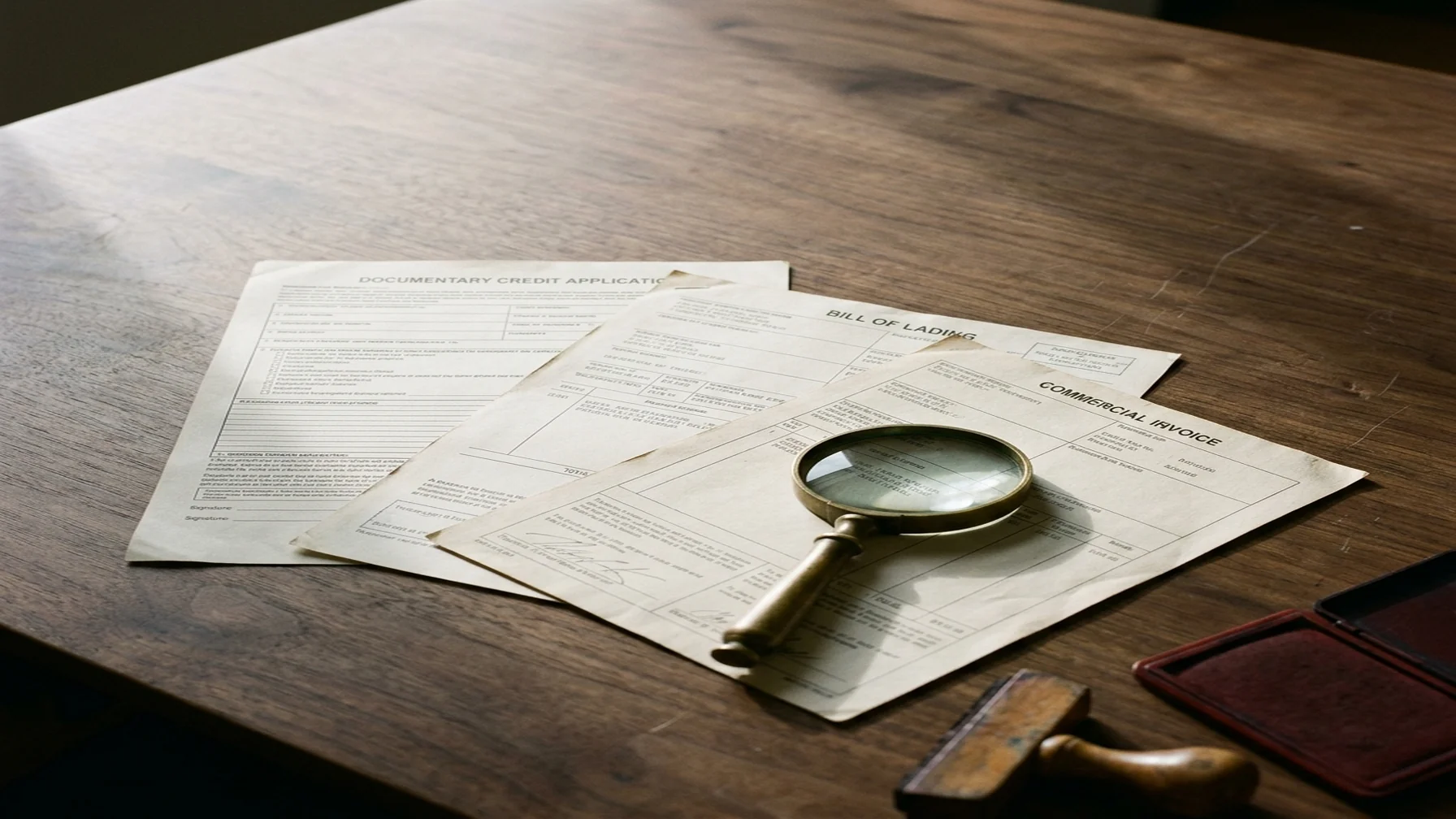
Trade finance desk with a documentary credit application, bill of lading and commercial invoice fanned across a wooden table beside a magnifier and a bank stamp, daylight from a side window

What a letter of credit actually does

Three concrete jobs the instrument performs between a buyer and a seller who do not yet trust each other.

01

Payment depends on documents, not on trust

The bank pays against a defined set of documents, not against the buyer's opinion of the goods. Get the document list right at the start and payment stops depending on the relationship between the two trading partners.

Read the document basics

Close-up of a shipping document set on a wooden desk, with a bill of lading and invoice fanned beside a pair of reading glasses in daylight

02

The issuing bank carries the buyer's risk

A seller in another country is relying on a bank, not on a distant customer. That shifts the core credit question from the buyer's balance sheet to the standing of the issuing bank, which is why the issuing bank's name matters as much as the price.

How issuer risk works
Bank facade with stone columns seen from street level, warm late afternoon light across the masonry

03

Terms are fixed before shipment

Dates, ports, incoterms, and the latest shipment date are locked in writing before goods move. That discipline costs time upfront and forces both sides to agree on specifics early, which is the point: ambiguity that survives into shipment becomes a discrepancy later.

Plan shipment terms
Container ship being loaded at a port berth, cranes overhead and stacked containers in the foreground, overcast daylight
A trade finance clerk at a desk comparing a stack of shipping documents against a printed checklist, with a folder of bills of lading and an invoice beside a laptop, lit by daylight from a side window.

Letters of Credit

How Letters of Credit Protect Both Sides

A letter of credit replaces trust between strangers with a defined set of documents a bank agrees to check before paying.

  • The bank pays against documents, not against the goods themselves
  • Terms in the credit must match the commercial contract exactly
  • Discrepancies are the most common reason payment is delayed
Read the letters of credit articles

Where Letters of Credit Break Down

Most discrepancies trace back to one of three places: the documents, the terms, or the timeline.

Close-up of a shipping document set on a desk beside a magnifier, with a bill of lading and commercial invoice partly visible

Documents that match the credit

A bank pays against paper, not against goods. Learn how invoice, bill of lading and packing list wording must mirror the credit field by field, and which mismatches trigger refusal.

Trade documents
Two people reviewing a printed contract across a meeting table, one pointing at a clause

Terms that hold up under scrutiny

Ambiguous shipment dates, vague description of goods and unclear charges clauses give issuing banks grounds to refuse. See how to read a credit before accepting it.

Letters of credit
A wall calendar with several dates circled in pencil beside a stack of shipping envelopes

Timelines and presentation periods

A credit expires on a date, and documents must usually be presented within 21 days of shipment. Miss either window and the bank's undertaking no longer applies.

Financing and compliance

Letters of credit

Documents decide whether the bank pays

Under a letter of credit, the bank reads the paperwork, not the cargo, so a single mismatched description can hold up settlement.

Read the document checks

Email updates

Get new letters of credit explainers by email

One email when a new explainer goes up, covering LC terms, document checks, guarantees and settlement practice. No fixed schedule, and you can unsubscribe from any email.

We use your address only to send new explainers from Letters of Credit Guide. We do not sell or share it, and every email includes an unsubscribe link. This is general information about trade finance practice, not advice on a specific transaction.